

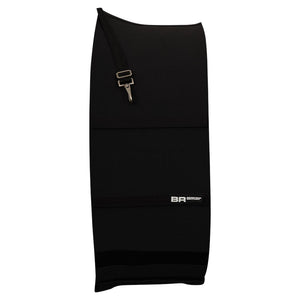


BR Armour Respect Band
Taxes included.
Shipping costs calculated at checkout.
A freshly clipped horse loses the protection of its coat, so the spur comes directly into contact with the skin: the hair wears away, a hairless patch appears, and then irritation develops. This elastane protective band sits between the spur and the horse’s flank.
It is stretchy and should be put on the horse before work.
✨ Key benefits
- ✔ Protects the flank from abrasion caused by spurs
- ✔ Particularly useful for a freshly clipped horse whose coat no longer provides protection
- ✔ Stretchy elastane: follows the movement without constricting
- ✔ Prevents hairless patches before they appear
📋 Technical specifications
- Type: protective band
- Material: stretchy elastane
- Use: protecting the flank from spurs
🐎 Why choose this product?
Spur marks remain visible for a long time: the hair grows back lighter, sometimes white, and the area can remain visible for months. The protective band is a preventative solution to put on before the mark appears, not afterwards.
🧴 Instructions for use
Lay it flat, without any folds, on clean, dry hair: a fold rubs more than a spur. ⚠️ If the hair still wears away, the cause lies elsewhere—a leg that is unsteady and rubs rather than a spur that makes contact. Hand wash without fabric softener.
Composition: elastane.